

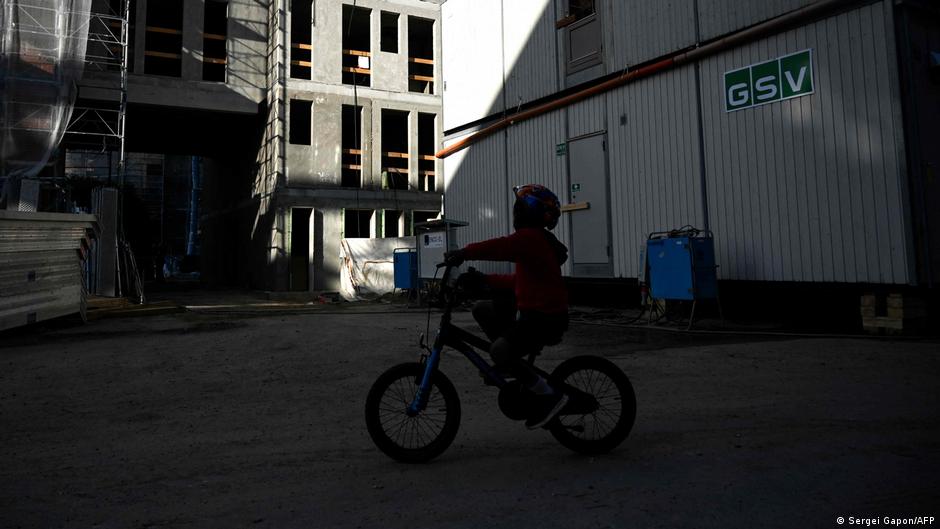
Although the Danish law aims to integrate society, the EU’s top court found that it could amount to ethnic discrimination.
Law and JusticeDenmark Denmark’s ‘ghetto law’ faces scrutiny after EU court ruling Although the Danish law aims to integrate society, the EU’s top court found that it could amount to ethnic discrimination.
Tenants on the Mjolnerparken estate in Copenhagen challenged the legality of development plans based on Danish social housing law The European Court of Justice (ECJ) on Thursday found that Denmark’s so-called “ghetto law” could be discriminatory, but said that the country’s own courts need to decide if it goes too far.
The law, passed in 2018, allows the government to reduce public housing in neighborhoods where most residents are from “non-Western” backgrounds.
Denmark’s government says the law was meant to help people integrate better by breaking up “parallel societies.”
What does Denmark’s ‘ghetto’ law say? Danish law categorizes neighborhoods based on unemployment, crime, education, income, and immigrant population. Areas where more than half the residents are “non-Western” and have at least two social problems are called “transformation areas.” A government list defines which countries are considered “Western,” including all EU member states. Public housing groups must cut social housing by 40% in “transformation areas” by 2030. They do this by selling, tearing down, converting, or ending leases on the homes. The policy has sparked criticism from rights groups, affected residents, and the United Nations. What did the ECJ find? Residents of Copenhagen’s Mjolnerparken estate challenged the measure in 2020, arguing it unfairly targets ethnic minorities. Danish courts then sought guidance from the European Court of Justice.
The ECJ said Danish courts must decide if the criteria specified in the law on public housing are based on people’s ethnic origin and thereby place them at a disadvantage. The ECJ emphasized that under EU law, neither nationality nor country of birth alone is sufficient to determine ethnic origin. Rather, this is assessed on the basis of several factors.
A lawyer for the Mjolnerparken residents facing eviction, Eddie Khawaja, noted that the ruling showed the criterion of 50% “non-Western” residents may seem “neutral on paper, but does not prevent residents from being subjected to direct or indirect discrimination.”
The Danish Ministry of Social Affairs and Housing said the case would now return to Denmark’s Eastern High Court and that the ministry would read the European court’s verdict carefully.