PugJesus
History Major. Cripple. Vaguely Left-Wing. In pain and constantly irritable.
- 16 Posts
- 34 Comments
Joined 8 months ago
Cake day: March 24th, 2025
You are not logged in. If you use a Fediverse account that is able to follow users, you can follow this user.
 1·4 days ago
I don’t think you can separate it like that given just a few months passing in between. Once they had power, they were pretty single-minded about reinforcing it and leaving nothing to chance.
“They tried to make their own reign stable” isn’t really an argument against them creating a power vacuum, no more than the Tsarist obsession with autocracy as a means of stability counts against the Tsar’s incompetence leading to a power vacuum.
Almost a year passed, in which Russia remained cohesive enough to maintain participation in WW1 and have radical, nationwide elections.
I mean, didn’t Spain and Portugal do something similar with South America?
Fighting very separate polities.
If they were actually fighting together you’d have a point, but what happened is that they drew a line on a map through Poland, independently expanded to it, and then didn’t cross it for a little while.
‘Independently expanded to it’ is a funny way of saying “Invading within two weeks of each other, causing the sudden dissolution of the Polish war plan, then meeting in the middle and having a joint victory parade”.
Oh, you meant the US. Sure, Soviet blood, American steel.
And without Britain staying in the fight, the US wouldn’t have gotten involved in Europe at all. And without Britain staying in the fight, a massive amount of air power would have been available for Operation Barbarossa.
Let me put it this way: in many places around the world the people are allowed to challenge the state’s claim to properties in courts with varying success. Your step one would take that away, so it is leaning in the direction of authoritarian.
Bruh, in state societies without widespread private land ownership there remains a distinction between state and public lands, and the state can be challenged with regards to ownership or usage rights in courts.
But I’m pretty sure Marx was more interested in Option B, I don’t think he was interested in using politics to build a strong democracy but rather wanted to topple any current system and hope a firect democracy pops up over night.
Reformism was not his first choice, but he mused at several points that bourgeois democracies with strong workers’ movements, like the USA and the UK at his time (big RIP to our labor movements), could potentially reform without mass revolution.
“It would perhaps be as well if things were to remain quiet for a few years yet, so that all this 1848 democracy has time to rot away.”
I’m unfamiliar with that quote or its provenance, but considering that the entire point of the disappointments of 1848 was that the revolutions, both liberal and socialist factions failed, and the ‘concessions’ offered in response by the established authoritarian regimes were nothing more than window dressing (with executions for flavor), thinking that the sheen of that farce needed to fade before further action could be taken is not unreasonable.
“…it happens that society is saved as often as the circle of its ruling class is narrowed, as often as a more exclusive interest asserts itself over the general. Every demand for the most simple bourgeois financial reform, for the most ordinary liberalism, for the most commonplace republicanism, for the flattest democracy is forthwith punished as an assault upon society and is branded as Socialism.”
How is that in any way in opposition to democracy or even reform?
“…the first step in the revolution by the working class, is to raise the proletariat to the position of ruling class, to win the battle for democracy.”
I repeat the second statement.
These are three separate Karl Marx posts and they’re extremely vague, but he has been somewhat consistent that any form of government that is not direct democracy must be “overthrown” or “fought” or “toppled”.
In the long term, sure. If your goal is direct democracy without a state (“Communism”), then the goal is to eventually get there. But Marx was always very clear that intermediate steps were not fucking nothing, and in many cases were necessary.
You may need to jump over the gap on a broken bridge, but better a broken bridge to jump over than the whole goddamn river.
A) An Authoritarian state who controls all property with no method to implement such state.
… what?
Abolition of private land ownership in favor of state land ownership is not inherently ‘authoritarian’, nor is it particularly impossible to implement.
B) An Anarchy where, since nobody owns anything, the influential will go wherever they want and take whatever they want.
You… you do realize that public lands does not mean “First come first serve”, right?
Man, this is basic pre-modern society shit. Read up on medieval village commons. Shit, read up on public lands today.
It was itself months old. Just like in France a century and a bit earlier, revolutions have a way of getting overthrown. And the one that stuck was itself autocratic.
“It’s just the nature of revolutions” rings a little hollow when two revolutions had occurred without kicking off a civil war until the Bolsheviks dissolved the democratically elected assembly. Feels rather like creating a power vacuum.
Yes, they did agree to not fight each other and split up some weaker nations (and trade? I’m not sure what you mean by supplying), but calling that an alliance seems like a stretch.
What do you call it when two countries agree to cooperate on military matters, including offensive military actions, up to an including performing a joint invasion of a country with the intention of annexing and genociding it?
Yes, it would have been a very different war if the Nazis weren’t already fighting.
No, as in, “Stalin believed that without American Lend-Lease alone, the Soviet Union could not have survived the war, even with the Western Allies being in the fight”
But, as it was, they were in a stalemate circa 1941 when they started Barbarossa, and the Soviets ended up taking the lion’s share of casualties tipping the balance hard against them. Being a history student, I’m sure you as well have seen actual historians explain that human wave tactics weren’t a thing - Soviets died in spades because they were fighting hard against an enemy that saw them as subhuman.
The Soviets inflicted approximately 50% more casualties on the Nazis (though a roughly equivalent number of total losses due to Nazis being more willing to surrender to Western forces), but suffered roughly ten times the number of casualties as Western forces, or five times if PoW deaths are excluded.
It doesn’t have to be human wave tactics to be a staggering display of incompetence that nearly lost them the war.
Those who are educated on the matter and oppose socialism do so because of a belief that continuing high-intensity development of the economy is preferable, for one reason or another.
Many of us would argue that, with the economy in developed countries at the point where everyone could very easily be guaranteed a good quality of life without further improvements, and that, in fact, further improvements at this point are more likely to come from the cultural and technological development enabled by a more equal and less labor-intensive society, capitalism has overstayed its welcome.
Anarchist Catalonia, Socialist Yugoslavia, any number of modern workers’ coops and corporations, including Mondragon Corp.
The only professedly socialist countries at current are ML-derived totalitarian regimes that have very little to do with socialist values or practices.
“Socialism is when the government does stuff 😭” - Average American, unfortunately
The fundamental issue of socialism and why it doesn’t and has not worked historically is because of human nature. A corporateocracy or a capitalist based society aligns much better to human nature than socialism does which is why it’s significantly more “successful”.
Except the only major sovereign socialist experiments have been either crushed by non-economic forces, or been Soviet-style totalitarianism.
The idea that capitalism is more based on ‘human nature’ ignores why capitalism actually works. You could argue, with much more validity, I would say, that feudalism is more in-tune with human nature than capitalism, yet almost no one disputes that feudalism is worse than capitalism.
The power vacuum came from the Tsar.
The Bolsheviks literally couped the democratically elected and socialist post-Tsar government of Russia, kickstarting several years of civil war.
They were always enemies of the Nazis, although they did temporarily agree not to fight them,
Funny, then, that they invaded Poland and the Baltics in tandem with the Nazis and spent several years supplying the Nazi war machine.
and then afterwards they basically won the war themselves.
Fucking what.
Even Stalin regarded the Soviet position as unwinnable without the Western Allies.
Socialism as outlined in Karl Marx’s Communist Manifesto is a little sketchier because it makes a lot of unrealistic assumptions about human nature and is just generally super hard to implement without creating a power vacuum.
Marx’s general proposals for the implementation of a socialist government:
-
Abolition of property in land and application of all rents of land to public purposes.
-
A heavy progressive or graduated income tax.
-
Abolition of all right of inheritance.
-
Confiscation of the property of all emigrants and rebels.
-
Centralization of credit in the hands of the State, by means of a national bank with State capital and an exclusive monopoly.
-
Centralization of the means of communication and transport in the hands of the State.
-
Extension of factories and instruments of production owned by the State; the bringing into cultivation of waste lands, and the improvement of the soil generally in accordance with a common plan.
-
Equal liability of all to labor. Establishment of industrial armies, especially for agriculture.
-
Combination of agriculture with manufacturing industries: gradual abolition of the distinction between town and country, by a more equable distribution of the population over the country.
-
Free education for all children in public schools. Abolition of children’s factory labor in its present form. Combination of education with industrial production, etc., etc.
Which of those do you think is hard to implement or makes unrealistic assumptions about human nature?
-
 4·10 days ago
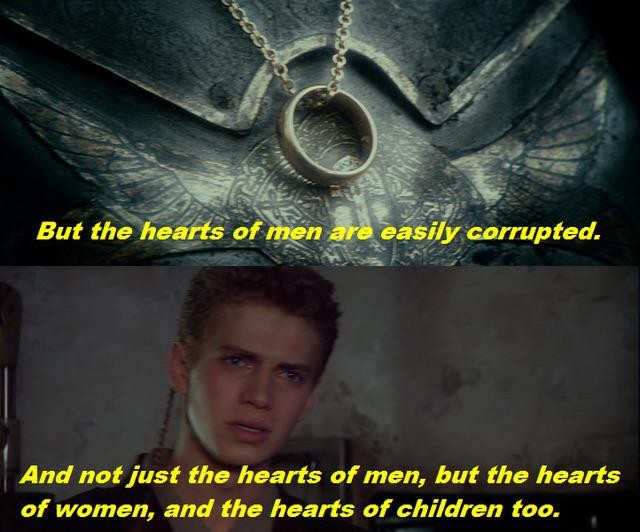
This is getting out of hand!
Isn’t the running joke nowadays that Germany dominates the EU?
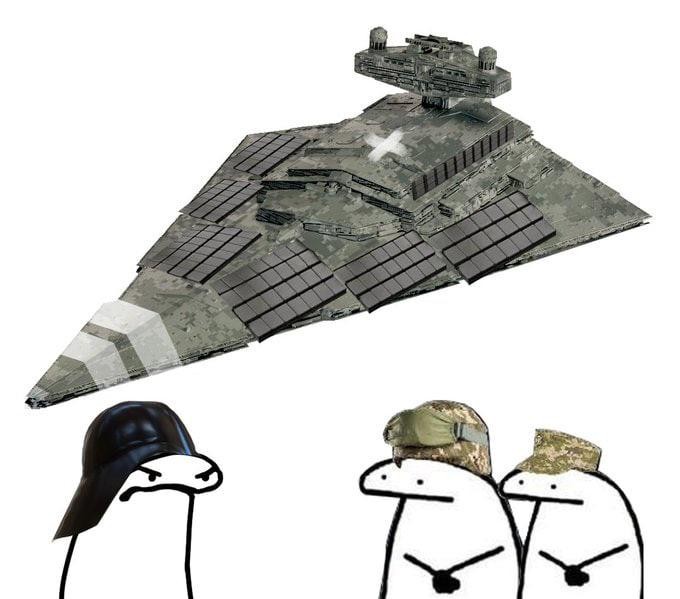
THE EU IS GERMANY’S REVENGE
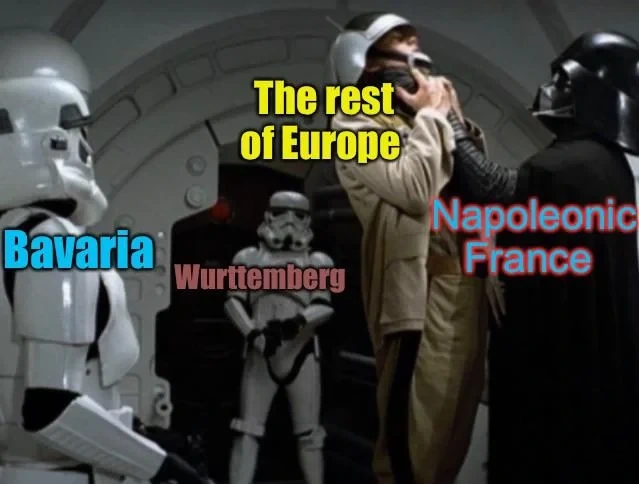
Explanation: During Napoleon’s wars on the continent, he made a ‘Rhine Confederation’ of German states to pay lip service to the idea of German nationalism and unity, under Napoleon as ‘protector’, of course. It was totally independent and sovereign and definitely not just a puppet ally to provide troops and supplies for Napoleon’s continuing conquests.
The only accounts I use are ones with the name “PugJesus”
 13·21 days ago
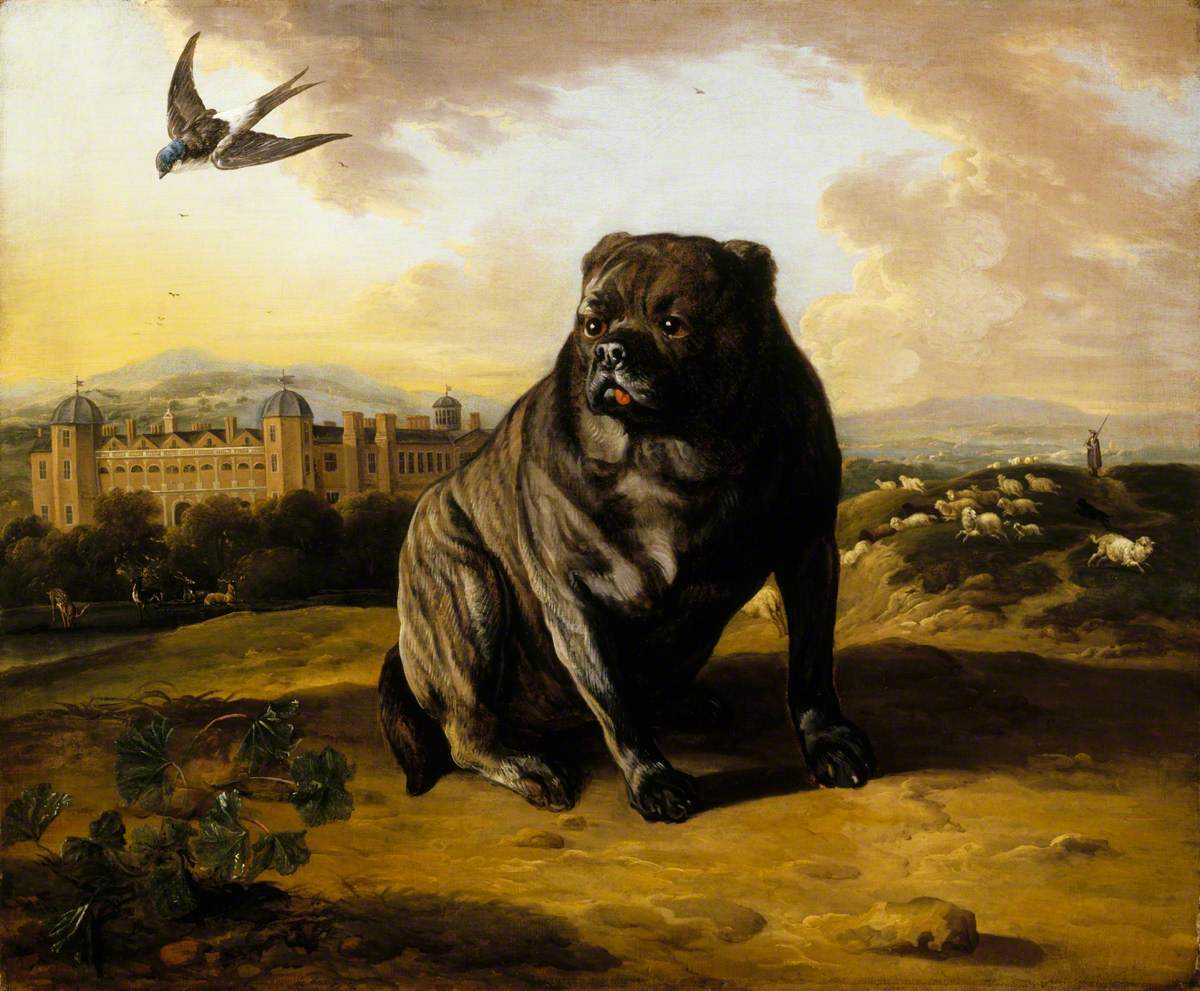
[approving inexplicable pug noise in defiance of the basic dictates of natural selection, lung functioning, and God himself]
 6·26 days ago
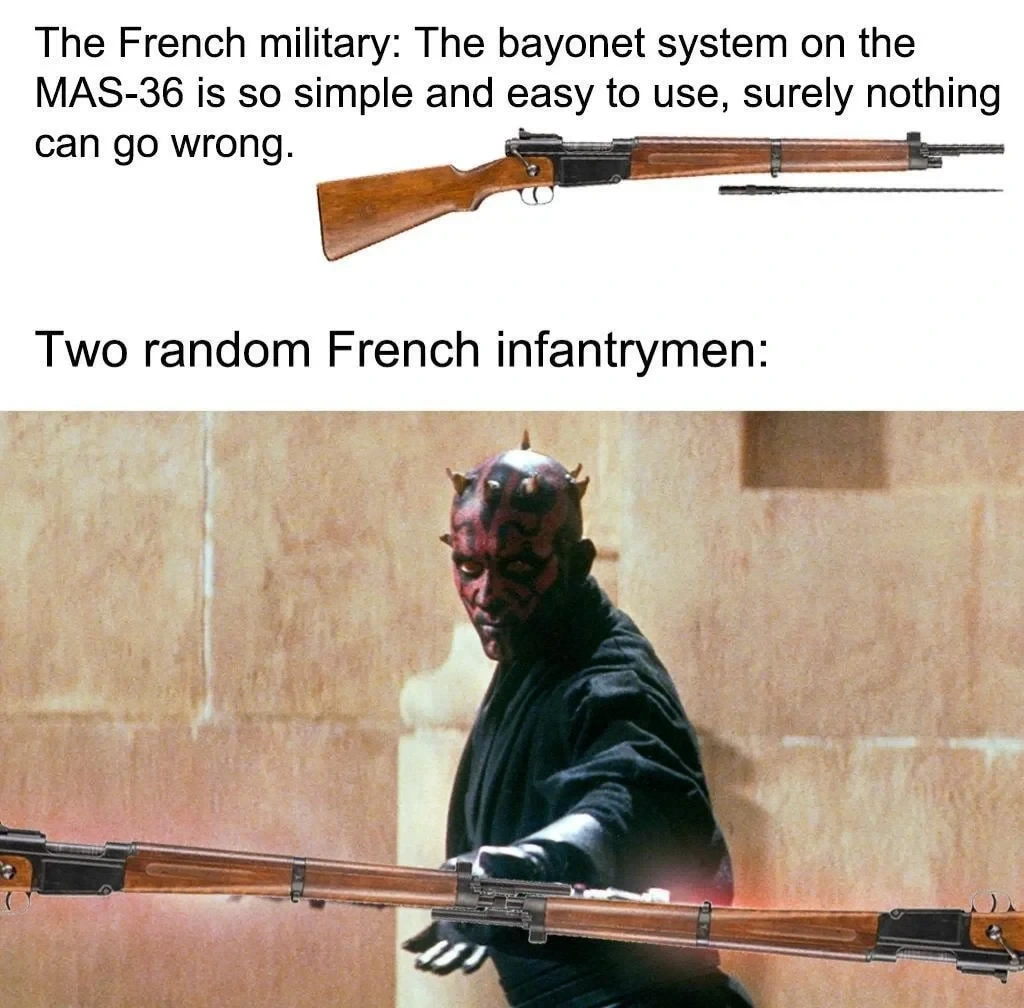
Qu’est-ce que c’est?
Explanation: The French MAS-36 rifle had a unique system for storing the bayonet, wherein the bayonet is simply reversed and inserted beneath the barrel and ‘locked’ in for storage. Efficient use of space!
However, a handful of goofing-off French infantrymen found out that the same system could be used to ‘lock’ two rifles together, and that doing so blocked the release button… making both rifles unusable without being disassembled.
Great work, GI Pierre! We salute your ingenuity in breaking guns designed to be impossible for any ordinary moron to break! o7



The previous coup attempt against the provisional government failed because there was no mass appetite in the population for a coup from the right, and the Bolshevik coup only succeeded at the cost of - again - sparking a civil war. The Mensheviks and SRs were both onboard with the provisional government; neither of them were likely to attempt a coup. Most of the right-wing elements had been stripped of power, and the military refused to follow a right-wing putsch attempt. If Lenin had stayed home, so to speak… what faction does that leave to attempt a coup?
It hardly seems ridiculous to think that the legislature that everything since the overthrow of the Tsar had been working towards - complete with arguments and concessions with competing factions - finally assembling after the long-awaited elections might have forged something lasting had the Bolsheviks not closed it down by military force, yes.