

42·
21 天前Stupid question.
Does this apply to what you write and upload on the Arduino IDE to your boards? Or just whatever you publish on their website/ cloud?
Stupid question.
Does this apply to what you write and upload on the Arduino IDE to your boards? Or just whatever you publish on their website/ cloud?

Im oldschool and use Gnucash
Is it worth stating which companies own which vpns? I saw a TIL that mentions a select few companies own most VPNs
Does it grant “backdoor” access?
Found this annoying too but didn’t think to do anything about it until I read this post…
Anyway looking it up, maybe try
about:config > tabs.group > browser.tabs.group.dragOverThresholdPercent
I guess turn it to 0?
Edit: nevermind this isnt an option anymore on my end.
Could also disable via browser.tabs.groups.enabled
They do? I dont recalling having needed to pay for it and dont need to log in. I even have a degoogled phone… maybe it used to be free
My experience has been OSMAnd feels “heavy”. It is a large app but i guess there’s so much it just feels sluggish. But it has the most features which I use as my go to reference.
Organic maps (and CoMaps) feels sleeker and quicker but when im on the road I want traffic updates.
For the last few years my go to is Magic Earth for the traffic data.
My issues with OSM is a lot of missing information and incorrect roads. I have contributed updates but when I’m driving and I come across something wrong there’s no way for me to flag it so i can revisit it later.
All in all I’m still torn between them all and still waiting for the day one ticks all the boxes.
More often than not I find I end up using Google Maps to get me out of a wrong or missing turn or to the final destination because finding places on OSM isn’t there yet. If OSM gets something wrong when I’m driving I don’t have time to faff around trying to fix it so GMaps takes over the rest of the way and I dislike having to do so

Wger maybe?
Its got a self hosted back end but i cant recall if the app works standalone
There’s also Simple that might do it
Both on fdroid
Checking if it got that web developer gig

Alovoa is free and opensource.
Its the only one i know that isn’t out to make money
Did you ever see the movie Holes (2003)?

Gotta find something to sell to stay afloat. Why not user data? /s

Tesco in the uk does this.
Coincidentally enough this post a few down from yours (on my feed) shows a trial for the second part of your post
Honestly depends on whats being served. As i say people can run servers on enterprise grade multi thousand £ systems or a £50 pi or mini pc.
Since you have a specific usage in mind, media server, you basically want hardware that will allow optimised performance so you can have a lag/ buffer free experience.
Say,
hardware thats good for on the fly encoding/ decoding
Lots of ram for multitasking.
Lots of storage to store the media.
Maybe gigabit network cards for multiuser streaming without bandwidth bottlenecks.
It really depends on the experience and chokepoints
ECC ram ill let someone more familiar answer but im leaning towards non critical and nice to have
Nothing you couldnt upgrade on your typical PC. Just makes life easier…at a cost.
Server serves a specific application(s). PC is general day to day usage.
Both are computers. Pc hardware can be used as a server. Server hardware can be used as a pc.
Using a computer for day to day tasks - call it a pc. Use it to run a web server application or host a game - that one or more users will access - call it a server
Hardware can be configured to optimise it for its function. E.g pc can have latest GPUs and “servers” can have multicore cpus and loads of ram, rack mounting form factor and dual power supplies for redundancy.
But it could also be weak - i have raspberry pi’s and old laptops set up as a servers

Ulnar Nerve AKA Funny Bone

Check out PrivacyGuides. They have recommendations for DNS including what others have commented
Mid way through installing underfloor insulation. Managed to do some rewiring, adding extra sockets, replace steel water pipes and apply woodworm treatment in the process. Sadly I’m sapped of time and energy so its all slow going

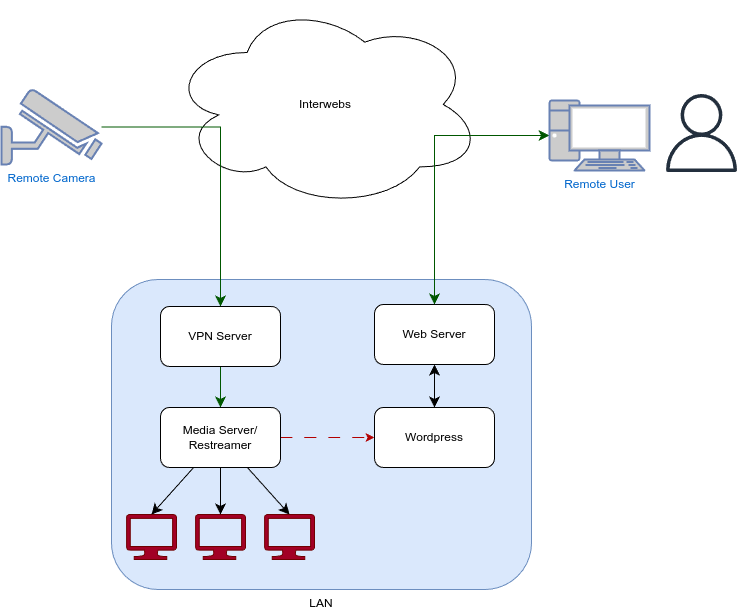
Reverse proxy the stream and reference itself in the reverse proxied website? Is there no way to do it internally in nginx?


deleted by creator