Jim East
I am not Jim West.
- 107 Posts
- 46 Comments



 1·2 months ago
That’s what I thought too, but I wasn’t sure enough to say so.


Tested on rats, not vegan, no reason to ever consume it.

In theory, I agree with you. Just cross-posting this so that people see this perspective and how much the infrastructure needs to change. Whether those changes will happen is the real question.
Always check terms and privacy policy before signing up, but these seem like they will be here to stay:
Those are all Lemmy and PieFed, and I’m not so familiar with Mastodon and others. Maybe look at mas.to ?
 1·3 months ago
Banana.
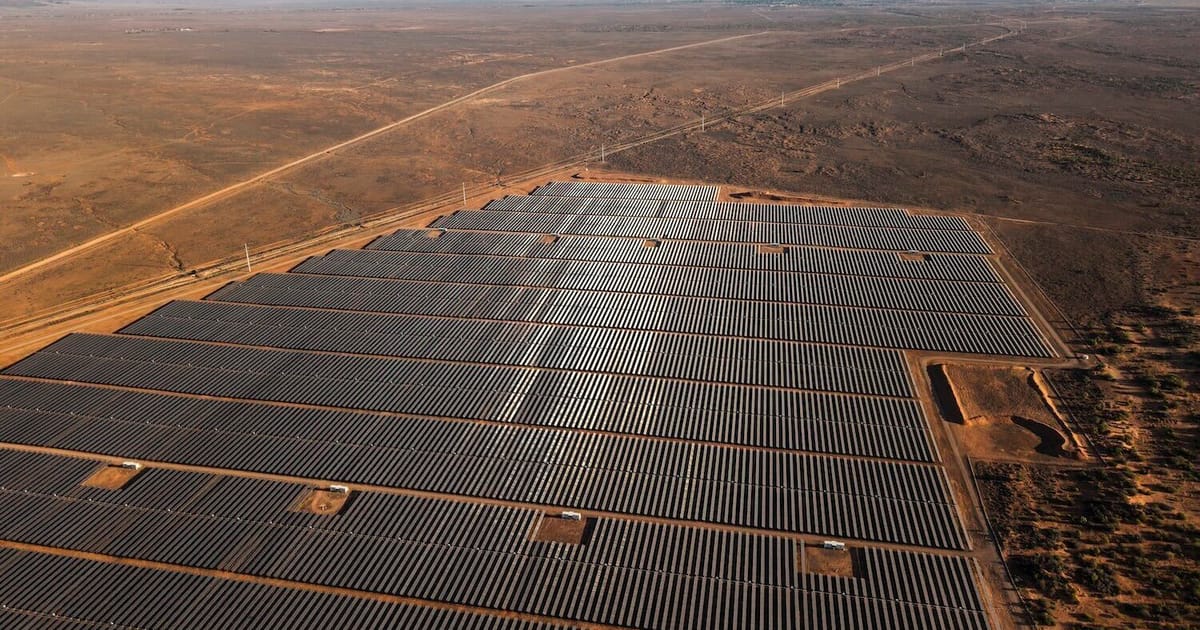
I don’t doubt that the return on investment for solar and wind will continue to improve relative to fossil fuels when used for electricity generation, but the problem seems to be, again, the manufacture of infrastructure such as wind turbines, photovoltaic panels, and so on, which require energy-intensive mining and refining of minerals. Unless every stage of the manufacturing process can be electrified, the efficiency of generating electricity using wind and solar won’t matter in the slightest, as there will be no way to use that electricity to eventually recycle/replace the existing wind/solar infrastructure, let alone to deploy more of it or to do either of these while maintaining the high energy return on energy invested.
To be clear, I don’t want solar/wind/etc to be dependent on fossil fuels at all, and so I would be interested to read an explanation of how these (or other) clean energy technologies can be deployed without using fossil fuels at any stage of the process. The problem presented in the article seems to be that such technologies currently do depend upon the use of coal, and I posted the article here with the idea that it might get people to start thinking about potential solutions to this problem, not to suggest that the deployment of clean energy technologies is not worthwhile.
Realistically, even if photovoltaic panels and wind turbines can be recycled 100% efficiently, the supply of energy from these sources at any given time will still have an upper limit based on the finite supply of the minerals required for these technologies, so people cannot continue to increase their energy consumption indefinitely even from “renewable” sources. But that’s a separate problem.
Do you know of a way to efficiently produce the infrastructure needed for solar, wind, etc using energy from solar, wind, etc such that the energy return on energy (ERoE) is high enough? That seemed like the crux of the argument made in the article, and I’d be interested to read a rebuttal.
It would seem that scaling back the use of many modern technologies is both necessary and inevitable. When hydrocarbon-based energy sources run out, it’s back to old-fashioned carbohydrates…
Banana. Banana is good for you.


This. Many (most? all?) companies currently producing lab-grown flesh do continue to exploit animals in order to produce it, so not vegan, but there’s no reason that it couldn’t be vegan.
Best tip I have is to think through the philosophy and understand your ethical motivations for not exploiting sentient beings. Whether you focus on the rights of the animals or your own values, deontology is your friend. With the ethical foundation in place, you’ll always find a way to figure out the practical aspects.
I think that violence can be adequately defined as “the instigation of aggression/harm against peaceful beings.” Hierarchy is not strictly required for this.
 4·6 months ago
!simpleliving@lemm.ee has moved to !simpleliving@slrpnk.net
Amazon Restore is one that I’ll be watching from now on!
If historically unforested land is artificially forested, then that might be worth crediting to humans, but that has never happened on a meaningful scale, and realistically, I don’t know if it could. If deforested land grows back (at whatever rate), then that is just nature cleaning up the mess as it always has, and the amount of carbon dioxide sequestered on that land is always going to be less than what would have been sequestered had humans not slashed and burned the vegetation in the first place. The forest has to recapture the amount of carbon dioxide released by deforestation just to “catch up” before it can continue where it left off, so to speak.
My understanding is that they want to consider only the effect that human activities are having on the climate, and so they account for all sources of humans’ emissions, but the amount of photosynthesis currently happening would happen even in the absence of human activity. Including photosynthesis in the accounting for humans’ emissions therefore doesn’t make sense, whereas accounting for deforestation is crucial, as that is a real change due to human activity; even if deforested land reforests itself, the initial emissions would not have occurred if not for humans’ actions.
 1·7 months ago
Is a fruitarian someone who only eats fruit?
Yes.
Do these people exist?
Yes, though not many of them as far as I know.
Do they have normal bathrooms?
Most probably poop outside or in a bucket, at least if their situation allows.
Upvoting for thought-provoking spoiler properly marked as spoiler.
It’s pretty arbitrary. In the broader sense, the word refers to any native flora or fauna that evolved in that location, and so its use in the human context doesn’t make much sense. Basically, people use the term to mean any group of people who were living in a place before Europeans or other imperialists arrived. People commonly accept that humans did not originate in the Americas, but still the people whose ancestors were there before white people are called “indigenous” even though their ancestors also came from somewhere else. In Japan, it’s the Ainu who were there before the next group of people from the mainland arrived. And so on.
I’m not familiar with this fictional world, so I may be missing something obvious, but is there something preventing them from planting more fruit trees?