

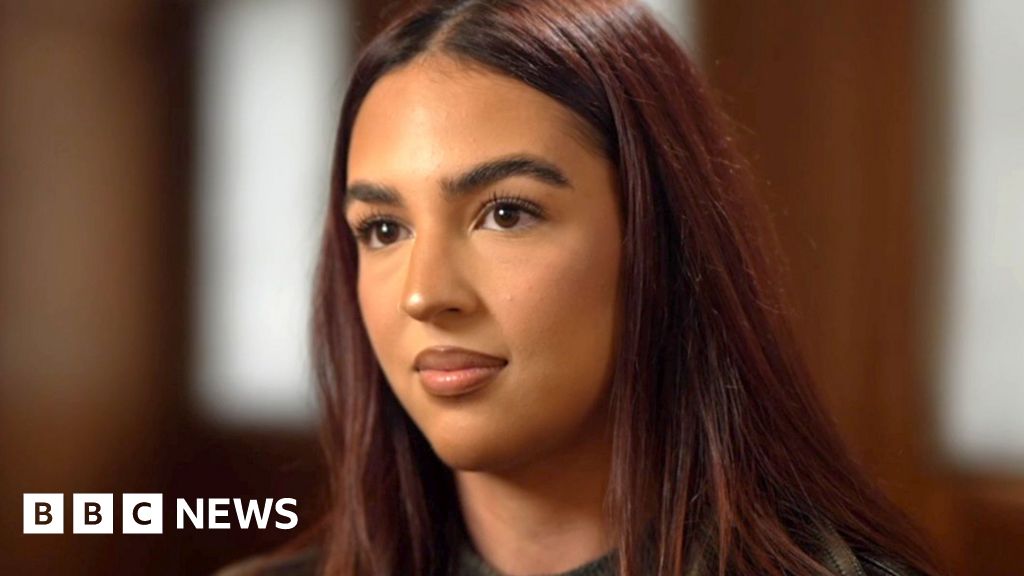
Dilara was on her lunch break in the London store where she works when a tall man walked up to her and said: “I swear red hair means you’ve just been heartbroken.”
The man continued the conversation as they both got in a lift, and he asked Dilara for her phone number.
What Dilara did not realise was that the man was secretly filming her on his smart glasses - which look like normal eyewear but have a tiny camera which can record video.
The footage was then posted to TikTok, where it received 1.3m views. “I just wanted to cry,” Dilara, 21, told the BBC.
The man who filmed her, it turned out, had posted dozens of secretly filmed videos to TikTok, giving men tips on how to approach women.
Dilara also found out that her phone number was visible in the video. She then faced a wave of messages and calls.
I see where you’re coming from and will do my best to clarify my position. I am going to distinguish between Explicit and Tacit consent, and Explicit and Assumed Knowledge. The reason I distinguish between Explicit Knowledge and Explicit Consent is that you can combine them in different ways:
Yes Explicit Knowledge Yes Explicit Consent (interview)
Yes Explicit Knowledge No Explicit Consent (bike thief being filmed)
No Explicit Knowledge No Explicit Consent (Covert filming)
In order to give Explicit Consent to being filmed you must first have Knowledge of being filmed. This might be someone who agrees to be interviewed on camera.
The bike thief didn’t give Explicit Consent to be filmed, but did have Knowledge of being filmed. If they didn’t want to be filmed they could do something about it, such as leave the area, or confront the person filming. Because they didn’t take action to prevent themselves from being filmed despite knowing that it was happening, they gave Tacit Consent.
You say that by this measure:
No, that’s called harassment and is a separate offence.
The woman being covertly filmed doesn’t have the Explicit Knowledge that she is being filmed and so cannot give Explicit Consent. She is also unable to take any specific action against being recorded because she unaware that it is happening: the filming is covert. (You misread my previous comment, I was saying she could have done something if she had known).
Here’s the catch: this is all happening in public, and there is no expectation of privacy in public. This is where Assumed Knowledge comes in. When you are in public you must Assume that you may be recorded. It may be by someone taking a selfie, or filming ducks in the park, you may never see them. This isn’t Covert, because you Know it may be happening (and if you see people filming or taking photos you can then deny Tacit Consent by not walking into their photo).