
I make my own garam masala
Whatś in yours? I’ve seen quite a few different recipes, so just curious about yours
I make my own garam masala
Whatś in yours? I’ve seen quite a few different recipes, so just curious about yours


Did you only read the summary or the full report on Tesla? I linked 2 different pages so you can have your facts straight
I beg to differ, see Mozilla’s “Privacy Nightmare on Wheels” report for Tesla
In short: currently all options suck

I’d like to push back a little on your second paragraph, as most of the listed things mentioned can be remediated with appropriate planning/actions. Of course every case is a different one, this always depends on the local context, but as a general rule:
Trees are expensive to maintain
If you plant native trees, that usually isn’t a big problem, as they have been adapting themselves to those conditions for thousands of years
in addition to cracking sidewalks and roads
You can always select appropriate trees species that don’t have such aggressive root system that tends to crack them
they need water
Once again, native trees are your best bet, in conjunction with water harvesting techniques, I don’t think it will be a problem. I always recommend Brand Lancaster and Andrew Millison work on this subject. See Harvesting Rain Water for more details
If you prefer video format:
“Free water was illegal… He changed that…” [19m15s]
YT link, non YT link
the leaves need to be cleaned up
I always find this a weird obsession, why do we have to clean them up? In a forest, it usually lies on the floor and becomes nutrients, habitat, reduces water evaporation from the soil, protects the soil from erosion, etc
they need to be trimmed
This one depends a lot on the context, but at least around here, trimming usually means butchering trees and making them completely unbalanced, which makes the population even more upset as your point below becomes the likely scenario
they pose a liability risk so need to be covered by insurance
Healthy trees are not likely to cause problems. Again this one depends on how the city deals with it, but routine check ups should be more common
Considering all the benefits greenery has in our lives, I still think we come out way ahead with it in the long term, even if we were only looking at it from an economic perspective
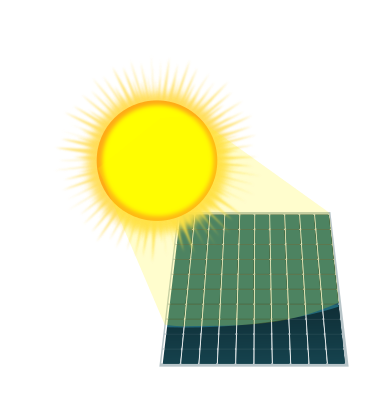
You can still grow stuff in them with agrivoltaics. You don’t have to lose the productive land below it
Come and join us at c/patientgamers

How do you go about watering it down? Just pour room temp water into the brew?
Brought to you by bypass paywall clean extension:
China Green Tech Firms Target New Consumers Hit by Iran War Energy Shock Lili Pike
China’s clean technology titans, hungry for export markets to boost flagging profits, aren’t letting a crisis go to waste. Manufacturers of electric vehicles, batteries, and solar panels have been wooing nations looking to wean themselves off costly fuel imports since the Iran war triggered a global energy shock.
One of the country’s largest solar manufacturers Jinko Solar Co. inked two deals at the end of April with partners in Nigeria — in a region where diesel prices have soared 40% since the start of the crisis — while auto manufacturers are hunting avenues to extend sales into locations including Europe, and energy storage firms are lifting overseas shipments.
“Chinese manufacturers are catching an export tailwind from this worldwide rush, which is helping to support their prices in overseas markets,” said Chia Chen, an analyst at Bloomberg Intelligence.
A Jinko Solar plant in Yiwu, China. Photographer: Huang Zongzhi/Xinhua/Getty Images
Exports of lithium-ion batteries jumped in March from the previous year while shipments of solar panels doubled on the previous month to reach a record, according to calculations by UK-based think tank Ember. Along with rising fuel prices, overseas shipments were propelled by the looming expiration of an export tax rebate for solar at the start of April, and a reduction for batteries.
A total of 50 countries had record solar imports from China in March, with Nigeria recording a 519% surge from February and notable spikes in Malaysia, Ethiopia, and Kenya.
“Nigerian end users can now reduce their reliance on diesel generators and access reliable, clean, and affordable self-generated power,” Jinko said in a statement, after striking a deal with Fouani Nigeria to supply 500 megawatts of equipment for use across shopping malls, factories, and homes.
Canada, among global markets hit by higher fuel prices, is ripe for new EV sales, according to Chery Automobile Co., one of China’s largest automakers. The company flew nearly two dozen Canadian car dealers to the Beijing auto show which concluded earlier this month.
Chery Chairman Yin Tongyue Photographer: Qilai Shen/Bloomberg
“Since the crisis, oil prices have risen in many places, some are experiencing supply shortages. So everyone’s perception of electrified vehicles is changing,” Chery’s chairman Yin Tongyue said in an interview. “There’s been a rise in orders and also some Western manufacturers are urgently looking for ways to partner with Chinese EV makers.”
A sales manager for another Chinese EV producer, who requested anonymity because they were not authorized to speak to the media, said the company is scouting for partners in southern and eastern Europe where customers are sensitive to gasoline price hikes.
Dongfeng Liuzhou Motor Co. is also sizing up new opportunities in Vietnam, where the government has responded to the Iran war by pushing for an expansion of EV charging infrastructure. “Now our customers have started talking to us about whether they can import our new energy vehicle products,” said Zhang Enming, a general manager in the company’s Southeast Asia region, in an interview.
China Passenger Car Association data for April showed exports of EVs soared 112% from the previous year. Official customs data for April has not yet been released, but in March EV exports grew 53% from the year before. Sizable EV markets that saw Chinese imports rise in March include Australia — up 67% from February, Belgium — up 63%, and Germany at 34%. Early indicators from April follow that trend. China’s top EV exporter BYD saw overseas sales jump more than 71% from the previous year.
Batteries for electric vehicles at a Gotion High-tech Co. plant in Hefei, China. Photographer: Qilai Shen/Bloomberg
Chinese battery exports rose just over a third in March from the previous year, and shipments from major supplier Sungrow Power Supply Co. are likely to exceed forecasts as the war stokes demand, according to BI’s Chen. Gotion High-Tech Co. Ltd. is aiming to double overseas shipments this year, the company said last month.
Read More: China Battery-Maker Gotion Says War Shifts Focus to Clean Energy
Even wind turbine producers, whose projects can take years to come to fruition, are using the energy crisis to drum up new opportunities.
In Europe, there is an “urgent need” for renewable energy sources and offshore wind power, Zhang Chuanwei, chairman of manufacturer Ming Yang Smart Energy Group said in an interview following a visit to the region. The equipment supplier is aiming to set up production in Europe after the United Kingdom rejected a plan to locate a plant in Scotland.
However, disruption to markets in the Middle East is seen weighing on some exports, even if the broader trend is positive.
“I think overall the overseas sales will increase but in some regions we need to make practical plans to accommodate the changes,” Victor Yang, senior vice president of Geely Automobile Holdings Ltd., told reporters at the Beijing auto show last month. The Iran conflict is “a challenge for everybody,” he said.
The article actually gives 3 options:
The only ways to make the deletion stick are to disable Chrome’s AI features through chrome://flags or enterprise policy tooling that home users do not generally have, or to uninstall Chrome entirely
You can see both. Water heaters usually have a tank right behind or above them and it has a silvery tint to it. Blue hued ones are mostly electric panels
I’m not sure if that is accurate, as Brazil is also a high humidity tropical country, which does not have all those plastic layers in their products and their plastic is way slimmer than those I’ve seen used in Asia.
As far as I am aware, they also have one of the biggest and most diverse ant populations, yet their biscuits are as crispy as any without all the extra plastic
Has there been any other games around here before?
It can be as low as €4/month + domain name, see:
https://docs.joinmastodon.org/user/run-your-own/#so-you-want-to-run-your-own-mastodon-server
From the top of my head, there are:
City of Amsterdam https://social.amsterdam.nl/
Baden-Württemberg https://bawü.social/
Netherlands https://social.overheid.nl/
Germany https://social.bund.de/
France https://social.numerique.gouv.fr/
EU Commission https://ec.social-network.europa.eu/
Switzerland had a pilot project, but I don’t know what happened to it
I’m pretty sure there are more local governments with their own instances or plans to do it , specially after all the digital sovereignty discourse got some boost to it

TIL it is mathematically impossible for all hungarian hospitals bathrooms to have toilet paper (according to Orban’s health secretary)



Por que no los dos?