

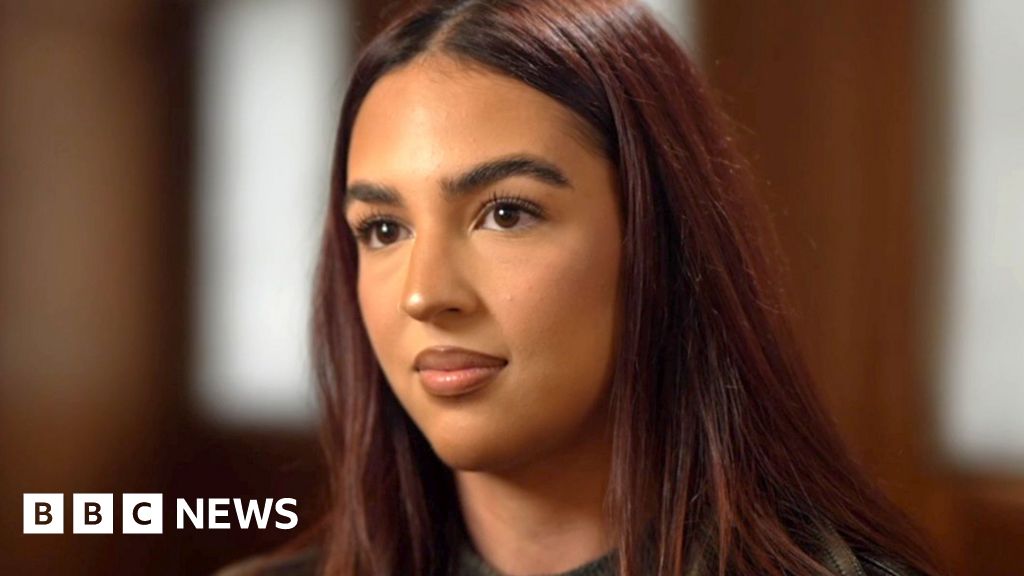
Dilara was on her lunch break in the London store where she works when a tall man walked up to her and said: “I swear red hair means you’ve just been heartbroken.”
The man continued the conversation as they both got in a lift, and he asked Dilara for her phone number.
What Dilara did not realise was that the man was secretly filming her on his smart glasses - which look like normal eyewear but have a tiny camera which can record video.
The footage was then posted to TikTok, where it received 1.3m views. “I just wanted to cry,” Dilara, 21, told the BBC.
The man who filmed her, it turned out, had posted dozens of secretly filmed videos to TikTok, giving men tips on how to approach women.
Dilara also found out that her phone number was visible in the video. She then faced a wave of messages and calls.
You’re no longer arguing against my point, which is that filming and photography in public with single party consent is important.
My point is that it presents more potential for harm than potential for good.
If single party consent is totally fine, then what’s the issue with the original post in question?
That’s where I made the distinction in my original comment between consent and knowledge. In the scenario in the article the woman being filmed had no knowledge that she was being filmed and was therefore unable to provide informed consent to the interaction. If she had known that she was being filmed, she could have walked away, or altered the way in which she approached the interaction. In the videos that I linked in my other comment everyone on camera knew that they were being recorded and were therefore able to decide if they wanted to consent to the interaction. Apart from possibly the cat.
In one of my earlier comments, I said:
In other words, I already distinguished between knowledge and consent because if I thought they were the same thing then it would have been redundant to mention both.
Anyway, you seem to be contradicting yourself. You’re basically saying you shouldn’t need someone’s consent to film them in public, but you can’t film them without they’re knowledge because it would mean you don’t have their informed consent? So you don’t need their consent, but you do?
Or are you just using this logical inconsistency to justify it when it doesn’t inconvenience anyone you care about, while still reserving enough room to condemn it when it inconveniences someone you do?
Single-party consent laws do not require the persons being recorded to have knowledge they’re being recorded. Hence, my criticism was of normalizing covert recording.
Adding a caveat that you don’t need consent to record someone, but you do need to inform them that they’re being recorded, doesn’t make any sense. Someone could stick a camera in your face and follow you around as long as they say “You’re being recorded.” People can’t just “walk away” under those circumstances, short of avoiding ever going out in public.
Also, saying she could have “altered the way in which she approached the interaction” sounds a lot like victim blaming. Just because someone doesn’t effectively respond to a situation does not imply they consent to it.
I see where you’re coming from and will do my best to clarify my position. I am going to distinguish between Explicit and Tacit consent, and Explicit and Assumed Knowledge. The reason I distinguish between Explicit Knowledge and Explicit Consent is that you can combine them in different ways:
Yes Explicit Knowledge Yes Explicit Consent (interview)
Yes Explicit Knowledge No Explicit Consent (bike thief being filmed)
No Explicit Knowledge No Explicit Consent (Covert filming)
In order to give Explicit Consent to being filmed you must first have Knowledge of being filmed. This might be someone who agrees to be interviewed on camera.
The bike thief didn’t give Explicit Consent to be filmed, but did have Knowledge of being filmed. If they didn’t want to be filmed they could do something about it, such as leave the area, or confront the person filming. Because they didn’t take action to prevent themselves from being filmed despite knowing that it was happening, they gave Tacit Consent.
You say that by this measure:
No, that’s called harassment and is a separate offence.
The woman being covertly filmed doesn’t have the Explicit Knowledge that she is being filmed and so cannot give Explicit Consent. She is also unable to take any specific action against being recorded because she unaware that it is happening: the filming is covert. (You misread my previous comment, I was saying she could have done something if she had known).
Here’s the catch: this is all happening in public, and there is no expectation of privacy in public. This is where Assumed Knowledge comes in. When you are in public you must Assume that you may be recorded. It may be by someone taking a selfie, or filming ducks in the park, you may never see them. This isn’t Covert, because you Know it may be happening (and if you see people filming or taking photos you can then deny Tacit Consent by not walking into their photo).