
As Professor Christopher Duggan points out, much of the enthusiasm for the invasion of Ethiopia stemmed from feelings that it would expiate the trials and tribulations suffered by Italy. He quotes a young recruit writing to Mussolini in early August 1935 a letter that shows how completely the young generation had swallowed the Duce’s propaganda.
The invasion would gain a ‘most beautiful victory’ for Italy, would ‘avenge the error of Versailles’, and would make Italy a great nation. ‘Today’, he added, ‘the youth of Italy has leapt forward as one man, ready to bear arms and carry into the barbarian land the symbol of Rome, symbol of greatness, civilisation and strength.’²⁰
Although Ethiopia did not participate in the First World War and thus had nothing to do with the Treaty of Versailles, the idea that annexing Ethiopia and handing over its resources to Italians would ‘avenge the error of Versailles’ was widespread among Italians. The vast majority of the invaders, many of whom were from poor peasant families, actually believed, absurd though it may seem today, that they were each entitled to a piece of far-away Ethiopia.
(Source.)
Marino […] states that he and his colleagues were instructed to kill civilians in retribution for the attack on Graziani. ‘We were told to revenge,’ he says, explaining that the Blackshirts took the lead in the killing.
Asked about the reaction to the massacre, in an interesting reflection on what the Italians thought the Ethiopians believed, he states that the Ethiopians were shocked and demoralised, because they had ‘thought that the Italians had come to bring civilisation’.
(Source.)
One of the principal objectives was to steal property, but, apart from chickens, livestock was apparently not wanted by the Blackshirts, yet they did not escape the general slaughter. ‘Some of the Ethiopian shepherds tried to herd some of the poor beasts into a corner, which appeared to them to offer some protection, but even the animals were not spared from rifles and machine guns’.⁶⁰
(Source.)
The idea that Ethiopian commanders represented new Hannibals, challenging Italy’s revived Roman imperialism, also implies the hope that Italy would eventually triumph over Ethiopia, as Rome finally destroyed Carthage. Indeed, Oriani locates Scipio’s victory over Hannibal as an important reference point for Italian history, embodied by the road.
(Emphasis added in all cases. Source.)
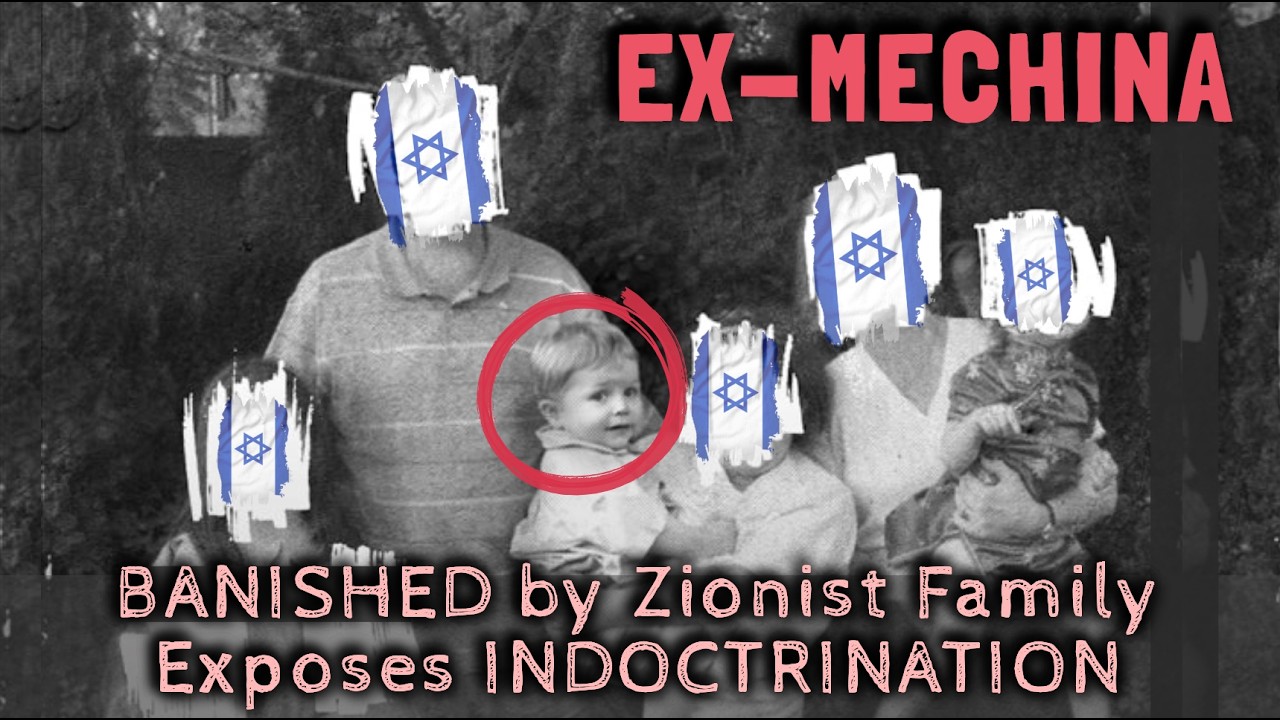
Witnessing Herzlian indoctrination I can’t help but think of parallels in Fascist and protofascist indoctrination. Seeing these settlers divide humanity in Chosen, unchosen, and animals, for instance, makes me think of a certain Fascist who divided humanity into culture-creators, culture-bearers, and culture-destroyers. The parallels are easy to explain: these are colonizers operating in very similar frameworks.
I found a YouTube link in your post. Here are links to the same video on alternative frontends that protect your privacy: