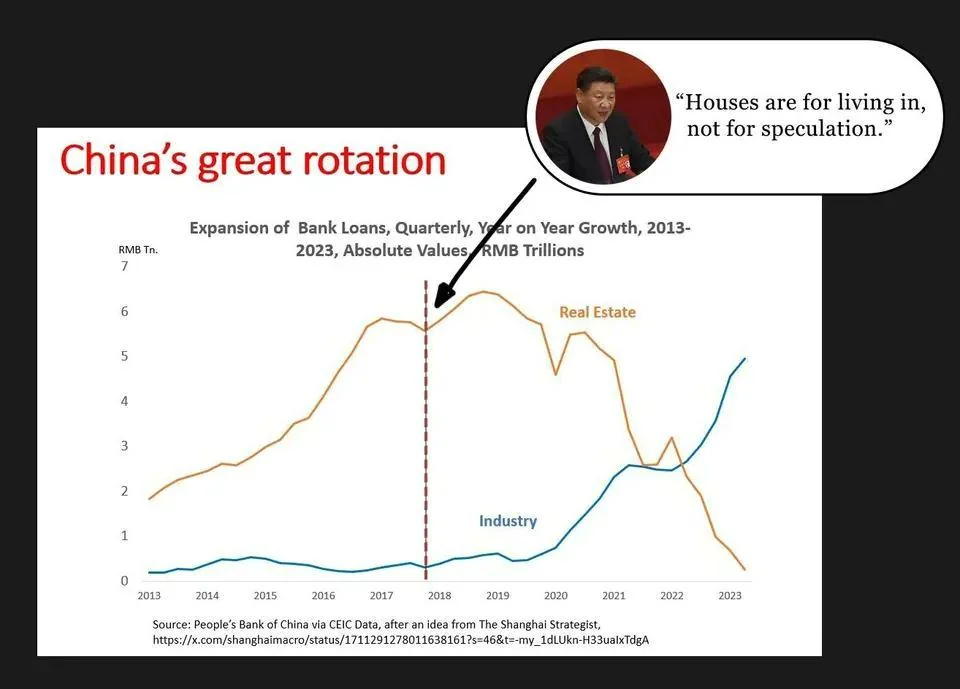

the maoist uprising against the landlords was the largest and most comprehensive proletarian revolution in history, and led to almost totally-equal redistribution of land among the peasantry
Surprised to see so many upvotes and no one correct this to Marxist-Leninist uprising since Maoism was barely a thing at that point of history, and the CPC at no point as ever advocated anything called Maoism.
Stupid Chinese don’t know that if you increase rent every year, GDP will go up.
so primitive 🤣
No, the west tells us their economy is collapsing because they can’t have a communist nation look good. So they lie.
Westoid economists were screaming about how China’s real estate market is overheated and will crash, and now that the CPC has done something about it, they’re screaming about how the real estate market isn’t growing as fast so China is doomed.
I think at this point they’re already screeching about “overproduction”.
It is not just “overproduction”. It is “overproduction” with a “stagnating economy” during an “economic downturn”. Only China is capable of collapsing in multiple contradictory ways at the same time like this.
Reminds me of this, as anti-communist rhetoric often does:
“During the cold war, the anticommunist ideological framework could transform any data about existing communist societies into hostile evidence. If the Soviets refused to negotiate a point, they were intransigent and belligerent; if they appeared willing to make concessions, this was but a skillful ploy to put us off our guard. By opposing arms limitations, they would have demonstrated their aggressive intent; but when in fact they supported most armament treaties, it was because they were mendacious and manipulative. If the churches in the USSR were empty, this demonstrated that religion was suppressed; but if the churches were full, this meant the people were rejecting the regime’s atheistic ideology. If the workers went on strike (as happened on infrequent occasions), this was evidence of their alienation from the collectivist system; if they didn’t go on strike, this was because they were intimidated and lacked freedom. A scarcity of consumer goods demonstrated the failure of the economic system; an improvement in consumer supplies meant only that the leaders were attempting to placate a restive population and so maintain a firmer hold over them. If communists in the United States played an important role struggling for the rights of workers, the poor, African-Americans, women, and others, this was only their guileful way of gathering support among disfranchised groups and gaining power for themselves. How one gained power by fighting for the rights of powerless groups was never explained. What we are dealing with is a nonfalsifiable orthodoxy, so assiduously marketed by the ruling interests that it affected people across the entire political spectrum.” ― Michael Parenti, Blackshirts and Reds: Rational Fascism and the Overthrow of Communism
This is also why they think One Child was a failure: a Western economy that size would need 1.8 billion talking heads by 2040 just to keep the spin going. CNBC headquarters alone would be the size of Manitoba and on the verge of gravitational collapse due to the flesh packed within.
Population decrease is only a problem in a world where profits must go up forever. China is investing heavily in industrial robotics and is not ideologically constrained from socializing the output of those robots like the US is.
They also can’t comprehend an economy based on actual production, not magic numbers on a computer screen.
I would argue that statement here is misleading.
Popular Chinese movies acknowledge high price of real estate in large cities. All theses movies are available in US, have subtitles in English and can be accessed using popular streaming services.
Examples:
Some of dialogue involving parents, if i recall right:
https://en.m.wikipedia.org/wiki/Love_O2O_(TV_series)
In the following show lower income aerospace engineer and high income actress. They directly state that he could not afford small apartment if not for money grant for being the best:
The dates on the shows are 2016 and 2021, and as we can see the real estate really starts winding down around 2022. The housing prices are naturally going to lag as well. So, I don’t think there’s any contradiction here.
Movies aren’t the same as reality, you know.
But they’re based in it. Especially dramas or soap operas which work because people relate to the characters or at least realize that what they’re going through can happen in the world. A silly example: a Cuban wouldn’t make Breaking Bad because why would the protagonist need to find cash for his treatment or kids, when healthcare and education are free?
So while we can’t tell how widespread the issues in those dramas are, it’s valid to say that they do appear in China (or appeared when they were created).
Because of the low rent and easy access to housing in New York City, maybe I should move there with my $40,000/year self-employed job.
In the Chinese shows mentioned, high rent is explicitly mentioned in the series, while in your example it is implied that they make ends meet with their low-income jobs. It’s not the focus of the series.
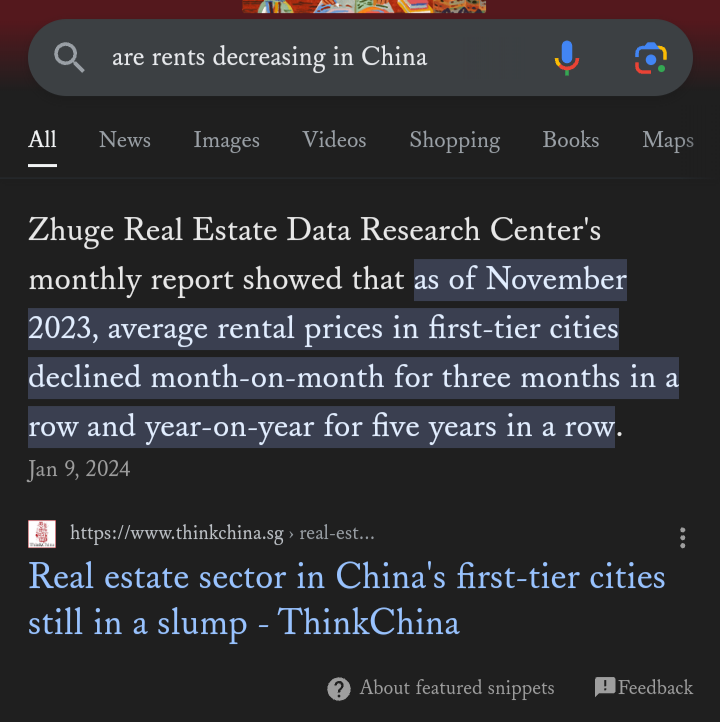
Luckily there is an easy way to find out if the situation is getting better or worse.
Capitalists interpret the health of an economy by how much CSAM they can buy within it.